
Vintage Curtains, Embroidered Baroque Drapes & Heirloom Valances
Direct Answer: Vintage curtains feature heavy chenille weaves, baroque embroidery, hollowed-out jacquard valances, and heirloom lace detailing. Classical European drapery pairs heavy 100% blackout damask outer panels with semi-translucent embroidered sheer inner layers.
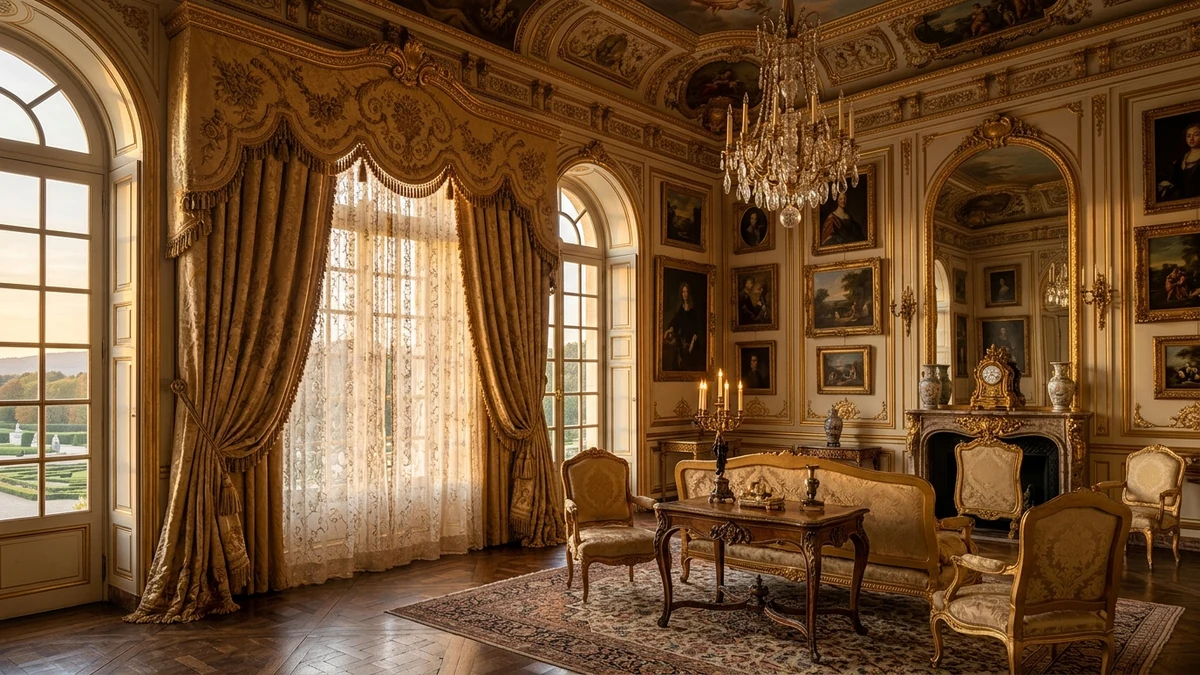
Heirloom Loupe: Heavyweight Chenille Damask vs. French Cutwork Lace
French Cutwork Lace: Intricate openwork apertures refracting gentle afternoon daylight with delicate filigree shadows.
Woven Chenille Damask: Opulent acanthus leaf motifs, dense acoustic absorption, and structural blackout warmth for formal Victorian parlors.
Classical European Window Design: Chenille Damask Drapes with Sheer Embroidery
Classical European window architecture from the Baroque and Victorian eras was never designed with single, minimalist panels. Instead, grand windows featured an orchestration of three distinct textile layers:
- The Architectural Pelmet / Valance: An upholstered cornice board or draped fabric swag mounted at the ceiling line to conceal curtain rods and eliminate upward light leakage.
- The Outer Damask Panels: Heavy woven chenille, jacquard, or silk lampas drapes featuring classical acanthus leaves and royal fleur-de-lis motifs, hung with deep French goblet or pinch pleats.
- The Inner Embroidered Lace Sheer: Semi-translucent French tulle or Belgian lace drapes that remain closed during daytime, casting delicate filigree shadows across the interior architecture. For modern rooms, compare these with contemporary velvet and pinch pleat alternatives.
| Design Era & Style | Signature Textiles | Heading Construction | Hardware & Tiebacks |
|---|---|---|---|
| French Baroque (17th C.) | Silk lampas, gold-threaded brocade, velvet | Goblet pleats with scalloped pelmet | Carved gilded wood holdbacks with bullion fringe |
| Victorian Manor (19th C.) | Heavy chenille damask, Nottingham lace | Deep French pinch pleats with box pleat valance | Solid cast brass acanthus wall arms |
| Edwardian Cottage (Early 20th C.) | Embroidered Swiss voile, floral linen chintz | Gathered rod pocket with tailored ruffle header | Wrought iron rods with ceramic finials |
Hollowed-Out Lace Valances, Scalloped Edges & Antique Metallic Threadwork
The hallmark of heirloom vintage curtains is the "hollowed-out" jacquard technique (broderie anglaise or cutwork lace). Craft looms punch openwork geometric and floral apertures directly through heavy textile weaves, reinforced with dense satin-stitch borders and spun metallic lurex threads.
When backlit by afternoon sun, these openwork apertures filter directional rays while the surrounding heavy fabric retains substantial thermal resistance. Always use our precision drapery sizing calculator to fit vintage window dimensions before ordering heirloom sets.
Preserving and Cleaning Heavy Jacquard, Chenille & Antique Lace Curtains
Preserving antique textiles requires preventive conservation. Direct ultraviolet rays break down vintage silk and rayon fibers over time. Installing an invisible UV-blocking solar film on your window glass extends the lifespan of antique embroidery by decades.
For routine maintenance, brush drapes vertically once per month with a soft horsehair upholstery brush. When deep cleaning is required, entrust fabrics solely to certified museum textile conservators or specialized dry cleaners who avoid harsh perchlorethylene cycles.
Frequently Asked Questions About Vintage and Embroidered Curtains
01 What defines authentic vintage European curtain design?
Authentic European vintage window treatments feature multi-layered architectural dressing: heavy outer damask or brocade panels framed by an upholstered pelmet valance and backed by intricate embroidered lace sheers that diffuse daylight while maintaining privacy.
02 How do hollowed-out lace valances enhance window architecture?
Hollowed-out lace valances use traditional cutwork embroidery techniques where open floral apertures filter incoming sunlight into delicate patterned shadows while concealing top curtain rods and bracket hardware.
03 Can heavy chenille damask curtains be hung on drywall?
Yes, but due to their substantial weight (often exceeding 25 to 35 lbs per pair with lining), brackets must be anchored into wall studs using 2.5-inch structural screws or heavy-duty steel toggle bolts rated for at least 50 lbs shear load per anchor.