
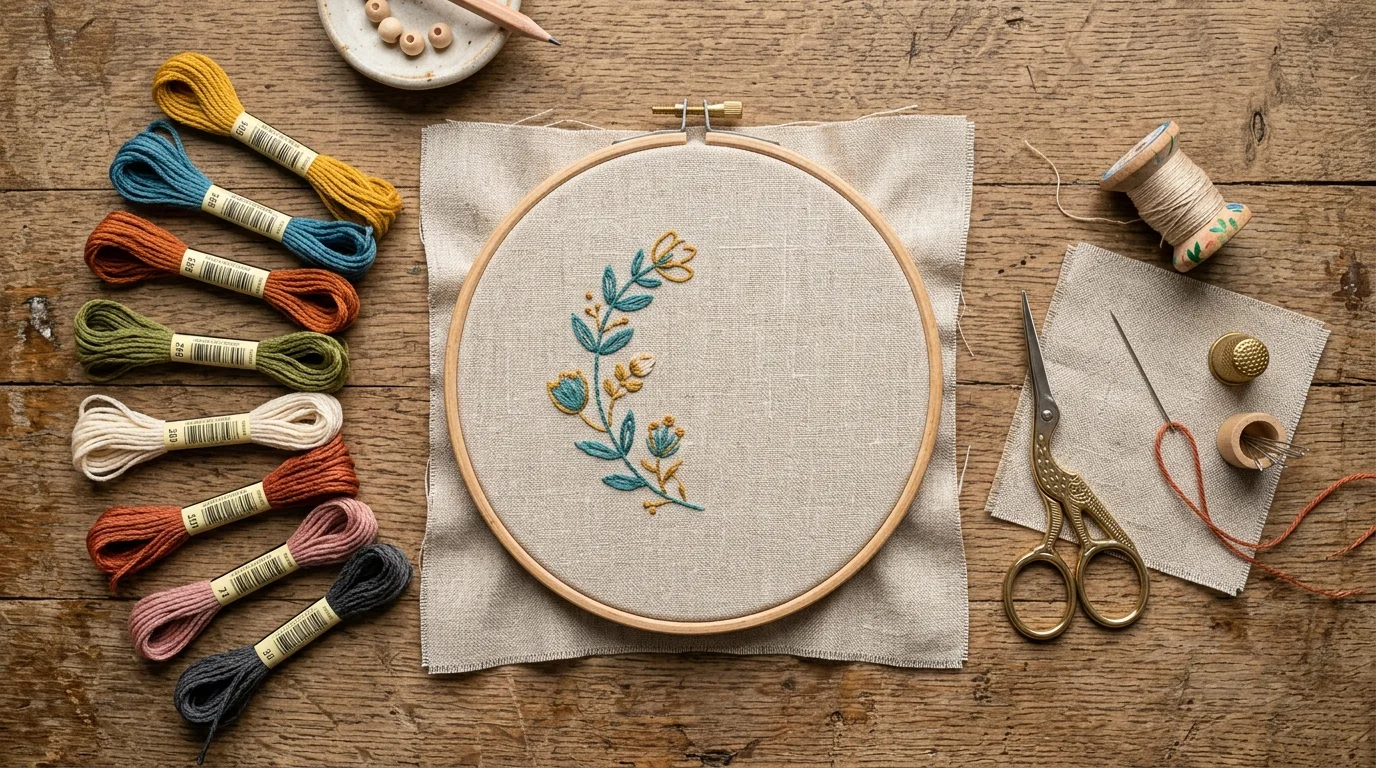
 Artisan Pick
 Multi-Craft Wooden Weaving Loom Kit
$46.99Adjustable solid hardwood frame loom with oversized shuttles, beater comb, and starter yarn for custom tapestries.
Direct Answer: DIY curtain construction requires calculating cut length as finished drapery drop plus 12 to 16 inches for double-fold bottom hems (4 inches) and top headers (4 inches). For standard 54-inch wide fabric bolts with a 52-inch usable width, each vertical seam consumes 1.0 inch of seam allowance.
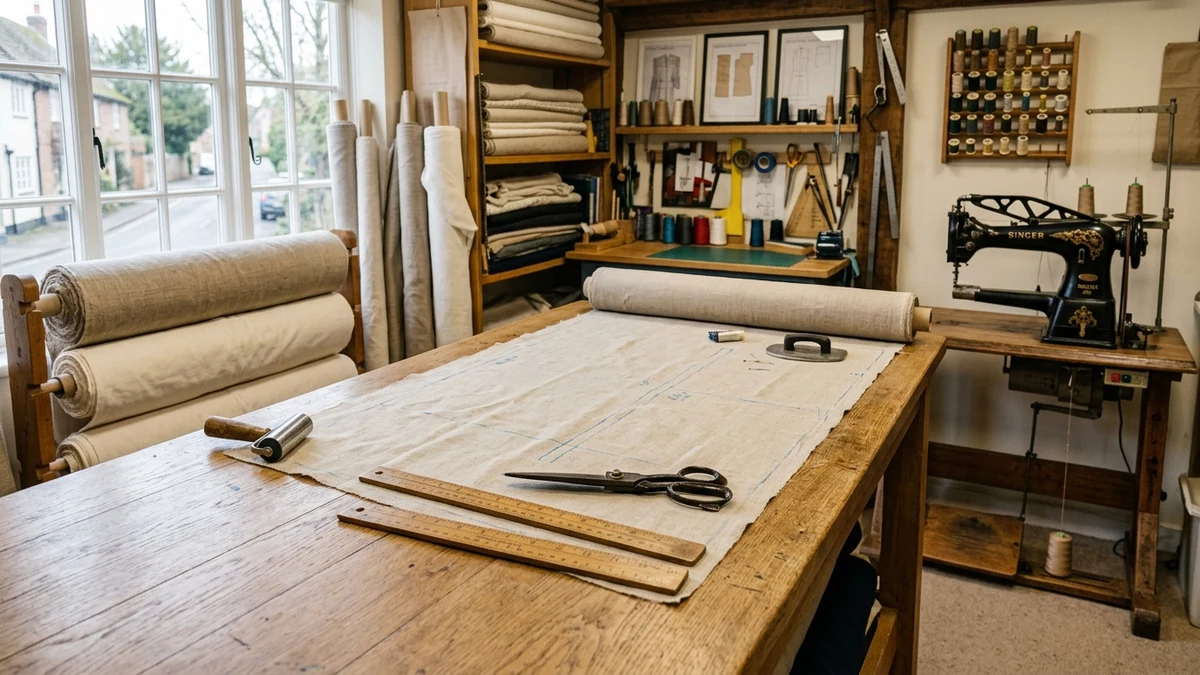
Constructing custom drapery requires strict mathematical discipline. Unlike garment sewing where narrow 5/8-inch seams are commonplace, suspended drapery panels carry substantial physical load and require double-folded 4-inch hems to provide pendulum drop weight and encase corner zinc weights.
Before cutting your fabric, cross-reference your window specifications with our curtain fabric yardage estimator and seam allowance calculator. When seaming multiple widths of fabric together for wide openings, always orient full bolt widths toward the room's interior leading edge and tuck partial seams into the return fold against the wall casing.
| Workroom Seam Component | Statutory Cut Allowance | Workroom Tolerance | Architectural & Pendulum Function |
|---|---|---|---|
| Double-Fold 4-Inch Bottom Hem | 8.0 inches total fold | +/- 0.125 inch | Pendulum weight; encases lead drapery weights |
| 4-Inch Header Hem | 8.0 inches total fold | +/- 0.125 inch | Encases buckram stiffener for pinch pleats |
| Vertical Seam Allowance (1.0 inch) | 1.0 inch per joined flank | 0.5 inch per seam allowance | Flat-felled vertical join across 52" panels |
| Pattern Repeat Alignment | Full VPR (12" - 27") | Exact pattern match | Eliminates visual stepping across adjacent panels |
Hanging length
Double 4-inch fold
Commercial drapery fabrics are rolled at 54 inches wide, but possess tightly woven selvages along both outer margins. These selvage strips react unpredictably to steam pressing and humidity, so professional workrooms trim them down to achieve a true 52-inch usable flat width.
When fabricating patterned damasks or botanical motifs, calculate the vertical pattern repeat (VPR) before making your first scissor cut. Every successive panel cut must be rounded upward to match the motif increment, ensuring vertical seam joints align seamlessly across your room's entire window elevation.
Blind-hemming machines or hand-stitched catch stitches should be employed along side hems to avoid visible needle indentations on the finished face of the drapery. When sewing delicate linen sheers or heavy slub yarns, insert round lead weights into the bottom corner pockets before closing the lower double hem to guarantee straight vertical hang.
Explore our artisan-selected weaving frame looms, heavy wool tapestry yarn skeins, and commercial workroom supplies. Combine custom woven textiles with our macrame cord length calculators and knot patterns to create harmonious handcrafted interiors.
Artisan Pick Adjustable solid hardwood frame loom with oversized shuttles, beater comb, and starter yarn for custom tapestries.
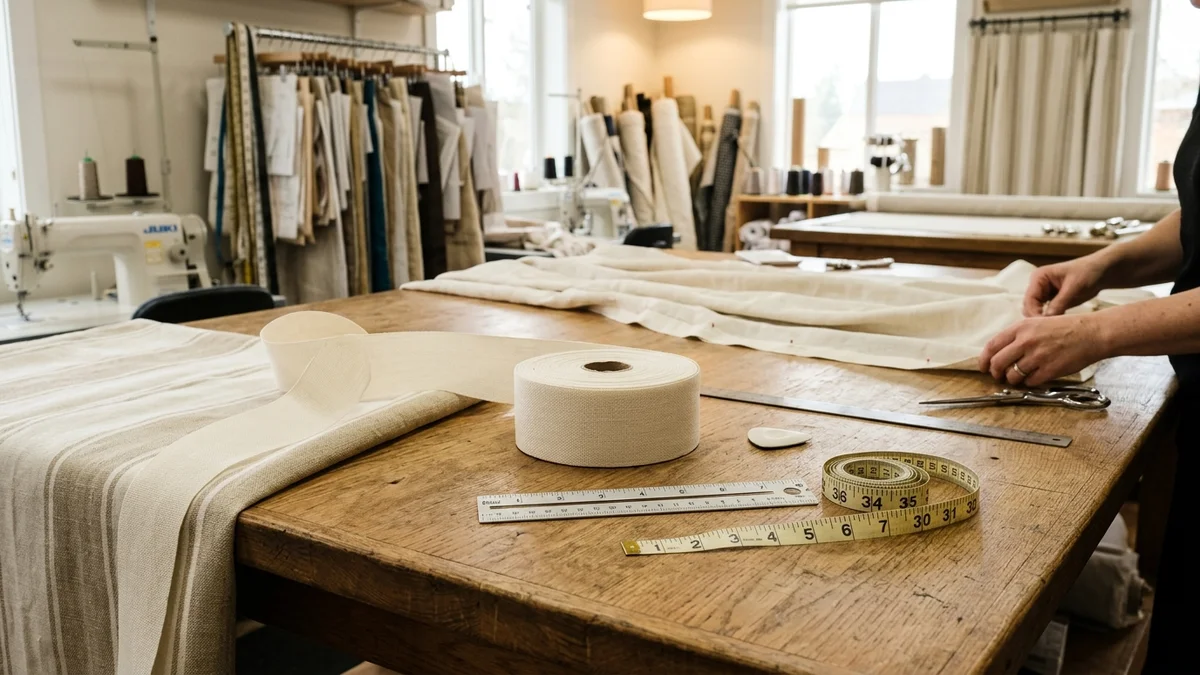 Workroom Tool
 Commercial 4-inch stiffened buckram heading tape and aluminum sliding hem gauge for precision pleats.
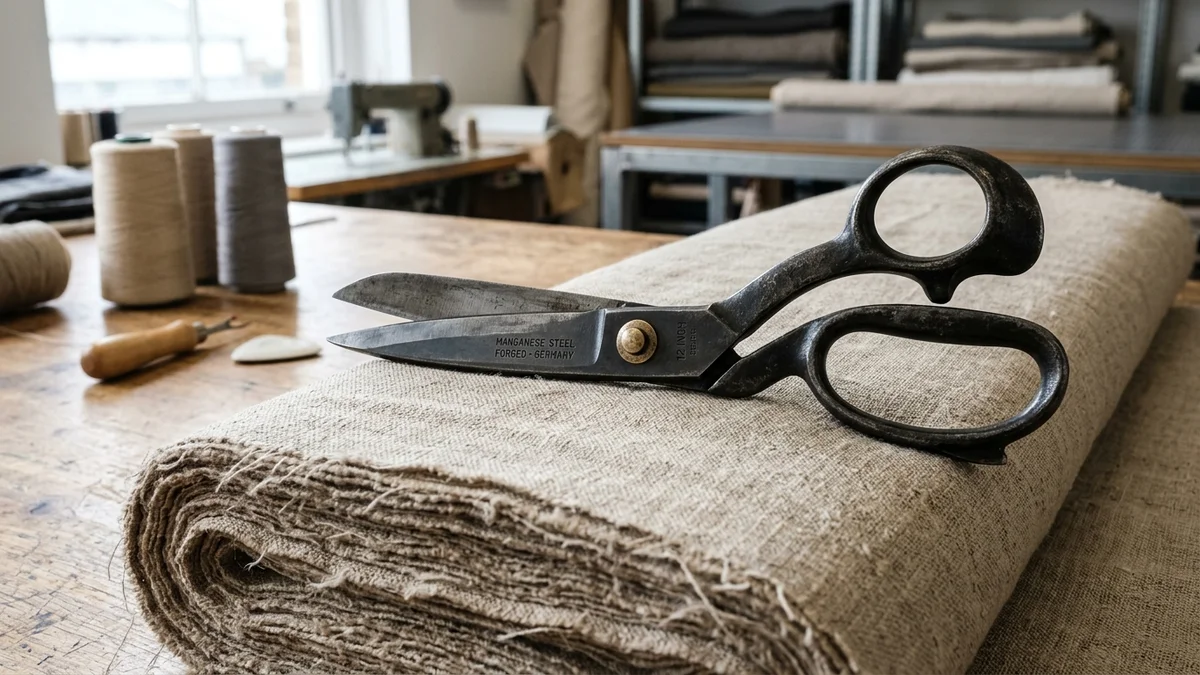 Amazon Choice
 Heavyweight bent-handle tailor scissors ground to cleanly slice multi-layered linen bolts without thread pull.
Professional drapery workrooms allocate 16 inches of total vertical hem allowance per cut length: 8 inches for a double-fold 4-inch bottom hem (which provides critical pendulum weight for smooth hang) and 8 inches for a double-fold 4-inch buckram-reinforced top header.
Fabric bolts are manufactured with woven selvages (fringed, stamped border edges) that shrink differently from the body of the fabric when ironed or exposed to ambient humidity. Workrooms trim or hide these 1-inch outer margins, resulting in a strictly calibrated 52-inch usable flat width.
When seaming panels for wide windows, patterned textiles require calculating the vertical pattern repeat (VPR). Every fabric cut after the first must be rounded up to the nearest full pattern repeat increment so motifs align seamlessly across vertical seam joints.