
Curtain Tiebacks, Wall Hooks, Holdbacks & Hardware Installation Guide
Direct Answer: Curtain tiebacks and holdbacks should be mounted two-thirds down the length of the window frame (approximately 40 to 48 inches from the floor) to create an elegant sweeping drape line without pulling the fabric taut or bunching the pleats.
Tieback & Holdback Mounting Height Calculator
Tieback Mounting Height & The Two-Thirds Architectural Proportion Rule
In classical architecture and interior styling, window drapery follows the Golden Ratio. If you bisect a curtain directly in the middle (50/50 proportion), the gathered fabric creates a rigid, visually awkward hourglass contour that visually truncates the room's vertical plane.
By applying the Two-Thirds Proportion Rule, tieback wall anchors are secured at exactly two-thirds of the total finished curtain drop (Lc) measured from the rod line. This allows the upper two-thirds of the drapes to billow naturally while the lower one-third sweeps outward towards the floor with graceful kinetic tension. Be sure to calculate drapery fullness and length for proper hook height before marking your drywall.
When determining hook placement, measure the horizontal distance from the outer window frame. Installing hooks 2 to 4 inches past the casing prevents bulky pleats from bunching against the glass, preserving clear daylight entry.
| Hardware Spec | Mounting Method | Weight & Shear Capacity | Optimal Textile Pairing |
|---|---|---|---|
| Zinc Alloy Wall Hooks | Drywall Anchors (Heavy-Duty Toggle) | 50 lbs lateral shear load | Velvet Drapes & Insulated Blackout |
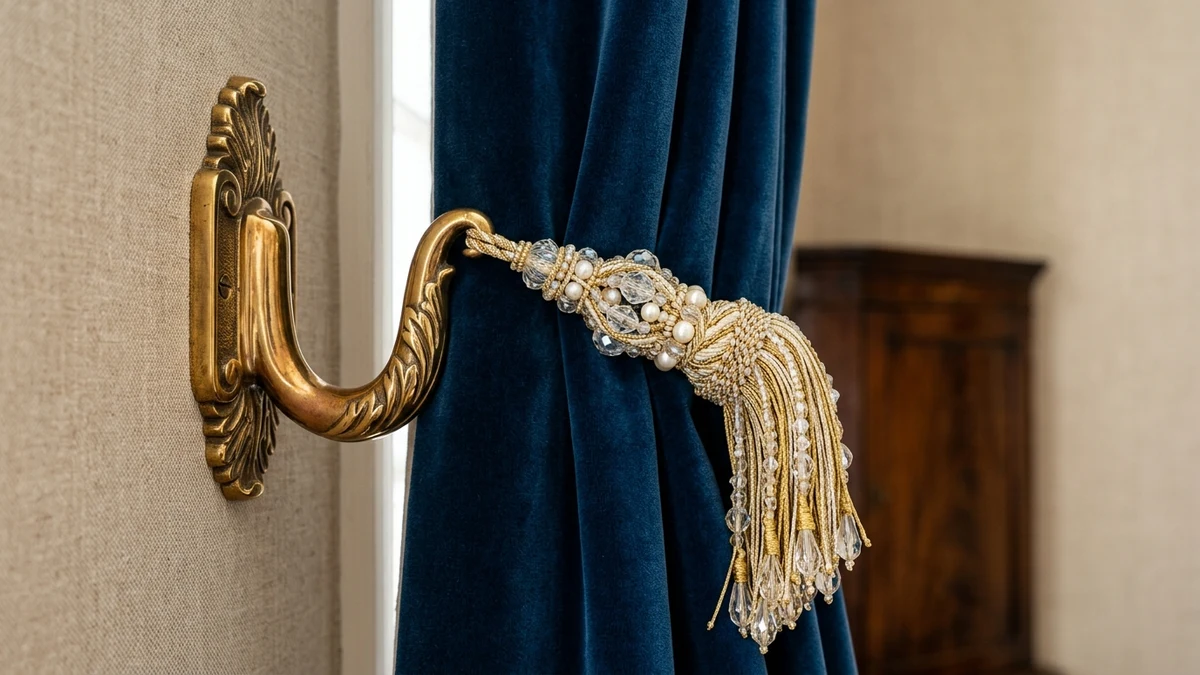
| Crystal Ball Tassels & Rope Holdbacks | Acanthus Wall Rosette (Stud Mounting) | 75 lbs vertical pull rating | French Pleats & Heirloom Damask |
| Magnetic Tiebacks | Zero-Hole Surface Clamp | 5 lbs magnetic clamp strength | Voile Sheers & Lightweight Linens |
| Cast Brass Drapery Holdbacks | Direct Timber Stud Mounting | 100+ lbs structural load | High-Traffic Living Salons & Patios |
Tieback Wall Height Formula
Variable Definition & Units
Length from rod
Two-thirds drop
Hardware Styles: Crystal Ball Tassels, Magnetic Clips, Brass Arms & Rope Holdbacks
Different window treatment styles call for specific holdback mechanics. While Rope Holdbacks suit relaxed coastal interiors, formal salons pair curtain styles and heavy blackout drapery with weighted silk cordage, acanthus medallions, and sparkling crystal tassels.
Rigid metal holdbacks provide hands-free daily operation where fabric simply nests behind curved solid brass or iron arms. Installing heavy-duty Zinc Alloy Wall Hooks guarantees long-term durability and structural resistance against heavy fabric pulls. In rental properties or temporary seasonal displays, magnetic clips offer a non-invasive alternative with zero drywall penetrations.
Wall Anchor Weight Ratings: Drywall Anchors vs Stud Mounting for Velvet Drapes
A lined pair of 96-inch velvet drapes exerts substantial lateral shear stress. Professional installers prioritize timber Stud Mounting whenever available. In hollow wall fields, always deploy heavy-duty Drywall Anchors rated for at least 50 lbs shear load to prevent blowout.
For solid masonry or brick installations, drill 1/4-inch pilot holes and insert flanged nylon masonry plugs paired with stainless steel architectural lag screws. This ensures long-term resistance against repetitive cyclical pulling.
Frequently Asked Questions About Curtain Tieback Installation
01 Where exactly should curtain tiebacks be positioned on the wall?
Mount your tieback hook approximately two-thirds of the way down from the top of the curtain rod to the floor (typically 40 to 48 inches above the floor for standard 84-inch and 96-inch curtains). Positioning hooks too high creates an abrupt hourglass constriction, while mounting too low pulls the pleats flat against the wall baseboards.
02 How far away from the window casing should tieback hooks be installed?
Install tieback hooks roughly 2 to 4 inches outside the outer edge of the window frame or casing. This allows the curtain fabric to gather comfortably behind the hook without bunching over the glass or obstructing natural window light.
03 Do magnetic curtain tiebacks work on thick velvet drapes?
Magnetic tiebacks work well for lightweight cottons, linens, and sheers. For thick velvet, heavy chenille, or insulated blackout draperies, solid brass U-shaped holdback arms or wall-mounted anchor hooks paired with braided rope tassels are strongly recommended to withstand the heavy fabric tension.